Negotiating Memory amidst Socio-political Crises
The power of memory within socio-political crises may seem insignificant. And yet, memory and its collective, cultural forms – cultural institutions such as museums and memorial sites; social commemorative practices and memory movements; collective identities and sense of belonging – are actively targeted and consciously instrumentalized by political actors and activists to bolster their power and to push for action, particularly within so-called ‘culture wars’. At the same time there is deep public trust in institutions of memory, such as museums - and practitioners see them as supporting collective democratic citizenship, particularly during ‘crises’. Although hard evidence for this ‘soft power’ argument remains limited, diverse actors increasingly mobilise heritage and memory for political purposes, suggesting that museums and other memory institutions are crucial ‘political infrastructure’.
Recent ‘crisis narratives’ imply that a collective sense of belonging and trust within democratic societies is at risk from the rhetoric and ambitions of diverse political movements and from the impacts of global change. Political and social ‘culture wars’ focus on and reinforce polarised ideologies, breaking down trust in democratic institutions and social structures, instrumentalising uncertainties to provoke crises. Memory institutions are instrumentalised by some as a stabilising force within such socio-political crises, while others mobilise them to destabilise, each according to their political aims. In many countries, memory institutions themselves increasingly position their work within this political space, seeking to ‘take a stand’ against anti-democratic developments, or to pursue ‘memory activism’ (Wüstenberg 2021) or ‘museum activism’ (Janes and Sandell 2019) to further social justice ambitions.
Can collective and cultural memory forms, navigate their increasing political instrumentalization and activist appropriation - both beyond and within the institutions themselves - without risking the loss of public trust? What happens to the mandate of democratic public education through memory, if such political, social and cultural infrastructures are governed by populist, or even far-right, parties? How might this differ in countries with different traditions and expectations around the independence, neutrality, or instrumentalization, or where crises have led to the neglect of memory as part of democratic political infrastructure?
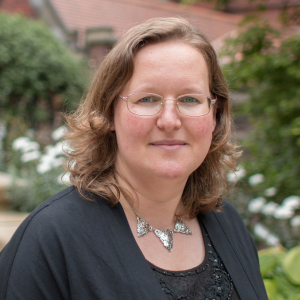
Professor Dr Susannah Eckersley is Chair of Critical Heritage and Memory Cultures, Newcastle University, UK. During her stay at the ZZF Potsdam she is a visiting scholar with the Leibniz Research Alliance ‘Value of the Past’.” /
Währens ihres Aufenthalts am ZZF Potsdam ist Professor Dr Susannah Eckersley Gastwissenschaftlerin des Leibniz-Forschungsverbund "Wert der Vergangenheit".