Nationalism as Driver of Illiberalism in East Central Europe after 1945 and 1989

Bildinfo

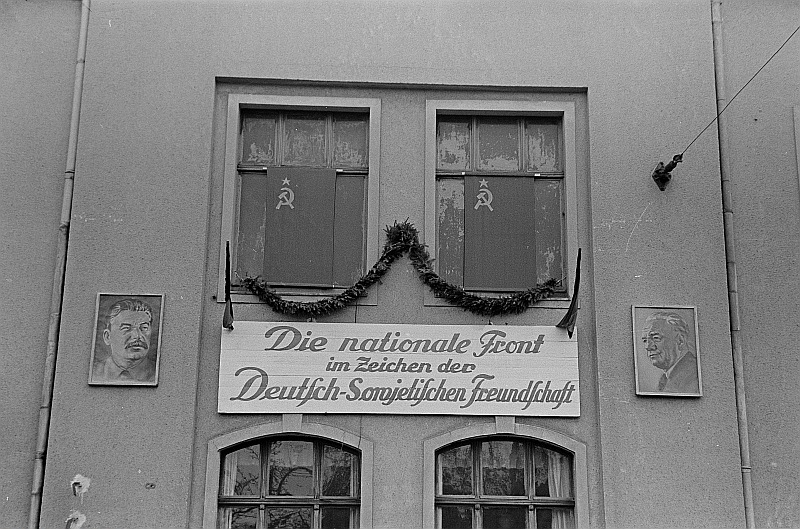
Sichtwerbung an einem Haus für den Monat der Deutsch-Sowjetischen Freundschaft, Fotocredit: Deutsche Fotothek, Rössing, Roger & Rössing, Renate, 1951, CC-BY-SA-3.0-DE.

Beginn des Projektes
Mai 2025

Forschungsprojekt 

In the 1970’s, when Viktor Orbán was a schoolboy, he helped to organize social and sporting events as secretary of the Young Communist League. In the 1980’s, when he studied law in Budapest, he forged close links with left-liberal intellectuals of the anti-communist opposition. In 1988, he co-founded Fidesz as a liberal youth movement, which was subsided by the Hungarian-born multimillionaire George Soros. Orbán even worked part-time for Soros’s Open Society Foundation, which offered him a grant to travel to Oxford in 1989 to complete a research project on the idea of civil society. Today, not only the political context, but also the politics Orbán stands for have fundamentally changed. Fidesz has become first conservative, then nationalist, moving to the far right of the political spectrum by adopting many claims of right-wing extremists, such as antisemitic conspiracy theories targeting Soros’s philanthropy in East Central Europe. In 2025, the party organized the annual Conservative Political Action Conference (CPAC) in Budapest, welcoming far right representatives from all over the world. It started with a video message from Donald Trump, a self-proclaimed nationalist since 2018, for whom Orbán’s ‘illiberal democracy’ has become a model. 

How can we explain this political shift from communism to liberalism to nationalism and the growing appeal of nationalist politics—not only in Hungary, but almost everywhere in East Central Europe? For a long time, political and historical research has pointed to the specific characteristics of the Eastern European region in answering this question: a communist past, few democratic traditions, many ethnic conflicts. These interpretations, which were once mainstream, now seem outdated, as political nationalism is on the rise almost everywhere in the Western hemisphere as well. Against this backdrop, this project is based on the research hypothesis that that the political nationalisms of Eastern Central Europe—and the former Eastern Bloc in general—were already more closely linked to Western nationalisms during the Cold War than is often believed. It argues, that nationalists could become drivers of illiberalism in Eastern Central Europe from 1989 on not only because the communist regimes had normalized nationalism on a large scale for their own purposes in the decades following World War II, but also because nationalist activists had continued to organize for nationalism among emigré communities in the West and in subcultures at home from 1945 onwards.

Portraitfoto von Dominik Rigoll, wissenschaftlicher Mitatrbeiter am ZZF Potsdam
Open

Bildinfo

Fotocredit: Frischefotos

Dominik Rigoll

Leibniz-Zentrum für Zeithistorische Forschung
Am Neuen Markt 1
14467 Potsdam

Email: rigoll [at] zzf-potsdam.de
Telefon: 0331/74510-121

zur Mitarbeiterseite